
Mary Queen of Scots is a tough historical figure to present. Tragic narrative aside, much of the issue is in how she is often portrayed. Mary’s life has provided the perfect backdrop for dazzling Hollywood epics with full period costume and gorgeous casting as well as page turning historical fiction (thank you Saoirse Ronan and Phillipa Gregory- they were great! And yes, I’m ignoring that tragic tween dumpster fire that is “Reign”!!!!). The problem is, Mary’s life wasn’t glamorous. It was awful. Mary was the victim of not only a patriarchal system but her own arrogance. Her life was a bizarre tragedy almost from the very day she was born. Famous now for being famous, almost like a Kardashian, Mary’s few vindications don’t hold up against the trauma, tragedy and intrigue. Her greatest contribution then was creating the Stuart line. Her son James VI, would go on to become James I of Scotland AND England and rule over a true empire. Not one to reference his famous mother, perhaps in his own trauma, he was seeking to disassociate and create his own Jacobean era, shedding the drama and trauma of the past. As we’ll see in time though, he created his own.
This series will start with Mary for context and over the next few weeks will attempt to show a more balanced narrative of the Stuart’s and situate them more properly within the historical context. Most people are unaware that James I is Mary’s son, and outside of Charles I’s execution, remember little about the Stuart’s. Worse, some tend to view them at best as misplaced blunderer’s. Discounting Mary, the English Stuart dynasty lasted 111 years, had 6 monarchs, presided over a time of monumental change that included the creation of a constitution and United Kingdom. The Stuarts, while certainly dodgy, were a force to reckoned with all the same and deserve some time in the spotlight.
Mary Queen of Scots- Queen of Intrigue and Drama
To begin- nothing about Mary’s bio would suggest that her life would in any way be normal. Born on December 8, 1542, her father James V died when she was 6 days old and since she was the only living child of her parents’ marriage, she was crowned Queen of Scotland as a newborn. Baby monarchs back then (Mary, Edward VI, Louis XIV, Ivan IV, and so forth) were like the equivalent of Disney child stars today- cute kids who were used by the adults around them, who grew up with unbelievable trauma and found all sorts of terrible ways to self-medicate! At the time of Mary’s birth and instant coronation, Scotland was in a tough spot in terms of its place on the continental stage. It had for years been over run and undermined by England, who of course now sought to find ways to attempt to undermine its autonomy even more. It was also being “pursued” by France as an ally. As gross as it sounds, Mary, as a newborn would have been an attractive option in the marriage market, as her husband would inherit the throne and later be the King of Scotland. Henry VIII tried to get his hand in the pot for his son Edward VI, and whilst the two were “betrothed” for a short time, the agreement was eventually broken. Upon this dissolution, King Henry II of France swooped in to ensure Mary would be betrothed to his son, Francis II. The union would create a strong alliance that would be beneficial for both powers and also irk Henry VIII terribly- success!
Mary and Francis
Being betrothed to the Dauphin also meant that Mary would be Queen of France. Mary was then shipped off at just 5 years old to France so that she could learn the fashions, customs and mannerisms of a French Queen. Mary would not see her native Scotland again for many years and would come home more French than Scot, pretty much a stranger to her people. Anyone starting to see some cracks in this story?
Mary had the domineering hand of Catherine de Medici as a future MIL (check out the “Serpent Queen” on Starz—again NOT “Reign”) which was not unhelpful for Mary’s development. Whilst Mary learned how to be a lady, taking lessons in conniving diplomacy (Catherine was a master of power, deceit and deception when she need be) probably wasn’t the worse thing. Mary and Francis married in 1558 when she was 16 and Francis just 14.
The match produced no children leading historians to speculate that it had never been consummated (you’d think these people would learn from the whole Katherine, Arthur, Henry VIII consummation debacle) due to age, and the fact that Francis was a constant sick kid. So sick, that Francis died about two years into their marriage, putting Mary in the worst position. For anyone who remembers when Arthur Tudor died, leaving Katherine of Aragon in some weird “Am I in, am I out” limbo, this is exactly what Mary now experienced, except she didn’t have an adorable red headed future psychopath as a BIL who wanted to marry her. At 18, Mary was quite frankly “damaged goods”. She would not be Queen of France and would have no husband who could “sail over the sea to Skye” and come home with her as King.
Issues with England
Dramatic but important interlude- Scotland and England, never ones to get along in the 16th century, would have even more issues before the century was done. In 1553, the other Mary, “Bloody Mary” ascended to the English throne after the death of Edward VI. Why does this matter you ask? Well, I’ll tell you because it matters big time. Mary Queen of Scots’ grandmother was Margaret Tudor- sister of King Henry VIII, which made Henry her uncle, and meant Scottish Mary, had Tudor blood a potential claim on the English throne. At the time Bloody Mary took over, England was a bit of a mess. Henry had died after what seemed to be a Renaissance reign gone WAY wrong, leaving England in debt, and religiously torn to shreds because of the Reformation.
Mary I, came to the throne with the intent of restoring Catholicism, and persecuted tons of Protestants, hence her name and also died fairly young in 1558, the same year that Mary and Francis married. Unfortunately, as much as people disliked Bloody Mary, they did acknowledge her as a legit option to be monarch- her mother was Katherine of Aragon and the first of Henry’s queens before it all went downhill. Mary died childless though which meant her “bastard” half-sister Elizabeth was next in line. Elizabeth was about 9 years older than Mary and her childhood trauma left her deeply insecure for the rest of her life. Someone who would be an easy person to turn her heart against, in time would be her beautiful, younger Scottish cousin. Not just because Elizabeth was jealous of her appearance, but those who supported Bloody Mary felt that Scottish Mary had a much stronger and authentic claim to Elizabeth’s throne. When Francis died and Mary was essentially homeless and looking to come home, she found herself on her cousin’s radar.
Homecoming
Mary had no clue what she was walking into when she arrived at the port of Leith in 1561. At 19, she had not seen the Scottish shores since she was 5. She was Catholic, French in her cultural mannerisms and conduct and essentially alone. In the time she had been gone, Scotland had been the victim of its own reformation and in a land where the clan factions created enough drama, adding a Protestant versus Catholic dynamic elevated the drama to a new level. However, this is the part that no one ever talks about- Mary handled it well. Her early reign was marked with remarkable tolerance towards the Protestants even though she herself was Catholic and France was looking at her to still honor an alliance. She appointed Protestant men to her council, was unbelievably pragmatic in her thinking and approach to the clan land politics and when “fire and brimstone” nut John Knox constantly attacked her from the pulpit as something unholy week in and week out- she shrugged it off and then arrested him!
Clearly Mary had some sort of natural aptitude towards reign. Her tolerance also showed forward thinking that by tolerating Protestantism, it could help strengthen a relationship with Elizabeth and England. All of the qualities above are usually used to describe one of the greatest monarchs in world history- her cousin Elizabeth I. So, what went wrong?
Lord Darnley
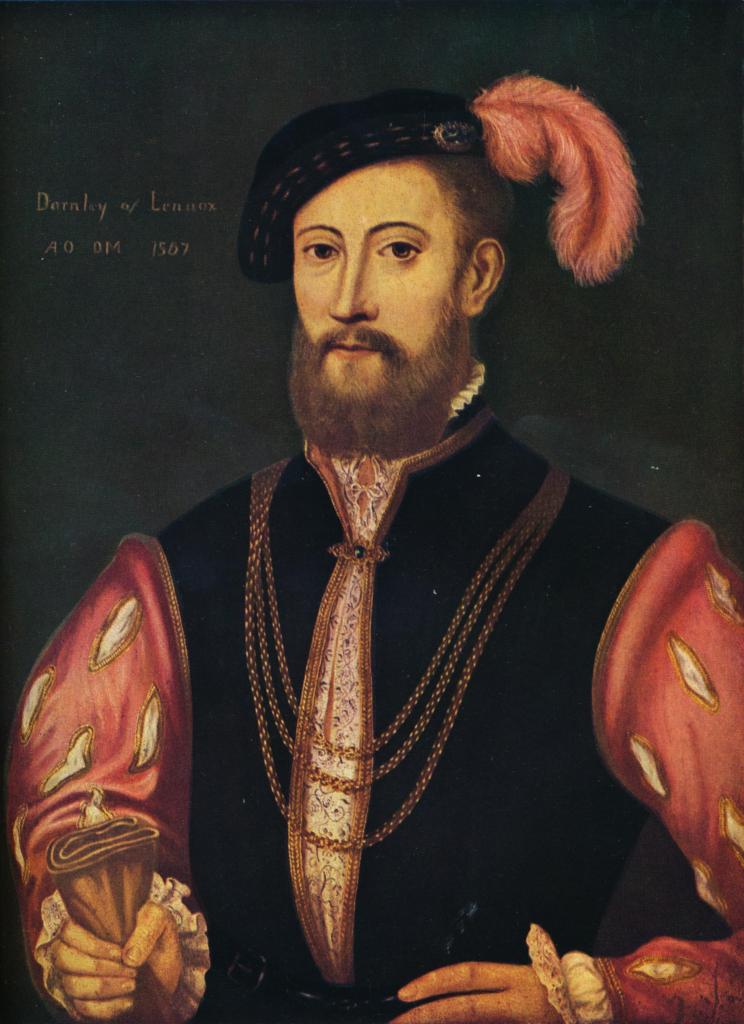
Henry Stuart, aka Lord Darnley, happened! Mary was young and beautiful and also sought a co-ruler to be by her side and help her conceive an heir to stabilize her reign. PLUS- she was married to a sickly, weenie of a Dauphin and could have legitimately sought some love! It is genuinely thought by historians that Mary was actually taken with Darnley. He has been rumored to be tall and handsome, and unlike Francis II, not sick all the time!
Aside from both being Catholic, Darnley was a cousin; his grandmother was also Margaret Tudor. In this sense, we could think – “wow, Darnley would strengthen Mary’s claim”. Wrong. Darnley was brought up in England, therefore most of the lairds hated him AND this now made a MAJOR, HUGE, TREMENDOUS threat to Elizabeth! The King and Queen of Scotland were both technically Tudor’s? Elizabeth’s Catholic detractors would have a field day. Plus, an heir would have a stronger claim than either Mary, or Darnley again making the insecure queen more insecure. Marrying Darnley in 1565, her half-brother as well as many of the Scottish protestant lairds opened rebellion against Mary. Things went downhill quickly from here.
On a personal front, their love story turned sour quick. Mary successfully pregnant, started to find herself turned off from Darnley as it became clear that being King Consort was not enough (want more of the consort concept? Check out my hot take on Queen Camilla) and his arrogance a pervasive problem with government dealings. Entitlement aside, Darnley was also unbelievably jealous and allegedly had Mary’s private secretary, David Rizzio, murdered in a beyond brutal act of vengeance. Rumors had begun to surface that the future heir was not Darnley’s and Darnley and his men had Rizzio stabbed almost 60 times in front of Mary (If you go to Holyrood Palace in Edinburgh, they will show you the stairs that the murderers crept up to the room where Mary was with Rizzio).
Feeling obviously unsafe, violated and like she could no longer trust her husband, it was the beginning of the end. The high profile and sickening nature of the crime, also unfortunately put a black spot on Mary’s reign and her personal and professional life would seemingly unravel together, mostly over the issue of Darnley.
It was into the sad world of a loveless marriage and even worse to come, that future James VI of Scotland/ James I was born on the 19th of June 1566. Realizing the damage that had been done to her image as a monarch and hopefully that of the birthright of her son, Mary met with loyal nobles later that year to discuss what could be “done” with her husband. If at this point, you’re getting Tony Soprano sitting around a table discussing “what should be done” with someone vibes, you’re correct. Darnley is on his way out and likely going to be sleeping with the Scottish fishes…
In 1567, Darnley who has been fearing for his life realizing that public opinion had turned against him and been away from the capital, was killed in Kirk ‘ of the Field. A massive explosion had been set, but it appears Darnley escaped the first assassination attempt. He was found half-dressed and dead in the garden. Whilst no strangulation marks could be found, it has been assumed he was murdered once the group likely sent by Mary, or her new beau Lord Bothwell realized that he had not died in the blast. The blast was suspicious enough and I might add NOT the behavior of a Queen, but the failure of the blast and subsequent snuffing out of Darnley was bleak for Mary.
Abdication
Shortly after the murder, public opinion fully turned against Mary. It probably doesn’t help that she was abducted by Bothwell, later claimed that she was raped, but then in turn married Bothwell and became pregnant. After a miscarriage a few months into the marriage, in July of 1567, Mary was forced to abdicate in favor of her son James, whom she would never see again.
Mary vs. Elizabeth
As Elizabeth became more insecure, and Mary, perhaps according to some accounts, more arrogant. Their relationship had broken down to a dangerous rupture. Mary’s marriage to Darnley, production of what was essentially a Tudor heir, the undignified drama that beset Mary in the aftermath from Darnley’s murder to the bizarre Bothwell marriage, severed any chance of her cousin coming to her aid. Real, or maybe made up, letters also surfaced that essentially made it look as if Mary was working with sympathizers in the realm to overthrow Elizabeth. Elizabeth took this threat as a legitimate one and had Mary imprisoned. She would remain imprisoned for the next 19 years.
Execution

Thanks to numerous plots- both real and imagined on the English crown, Elizabeth had come to a point where she had tired of her cousin and the drama which constantly ensconced her life. Under pressure from her ministers, Elizabeth had Mary executed on February 8, 1587. She was 44, hadn’t see her son the future king since he was 1, and spent much of her life in a country other than Scotland with people who seemingly used and abused her. It is rumored when Mary died her final words to the executioner were “I forgive you with all my heart, for now I hope, you shall make an end of all my troubles”. Instead, it took multiple blows to kill Mary after a hitting both her head and failing to sever her neck. When her head was held for all to see, it fell as Mary had been wearing a wig. Even in her final moments her life was marked with pain, no privacy and a lack of dignity and respect.
Aftermath
Upon hearing of the execution, it is claimed that Elizabeth was angry and insisted that she had not wanted her cousin executed. Elizabeth was likely vacillating to save face, lest she be accused of murdering her cousin on shallow grounds. Mary’s story was potentially not in vain though. 16 years later, Elizabeth I would die alone and childless, and it would be that little boy whom she had left behind so many years before who would take his place in history as the first monarch to reign as BOTH king of England and Scotland, thus establishing the new Stuart dynasty in England as the Tudor’s ceased to exist. His dynasty would be fraught with death and war. However; it would also create the English empire and greet the dawn of a new age of progress and modernity. It’s time to give the Stuart’s a second look.

 A Courtly Affair: A Blog of Royal Intrigue and Modern British History
Leave a comment